Is Dehydration Actually a Common Migraine Trigger?
Quick Answer: Yes, dehydration is one of the most common and most overlooked migraine triggers, and studies suggest increasing daily water intake reduces both the frequency and duration of migraine attacks for many people who are chronically under-hydrated.

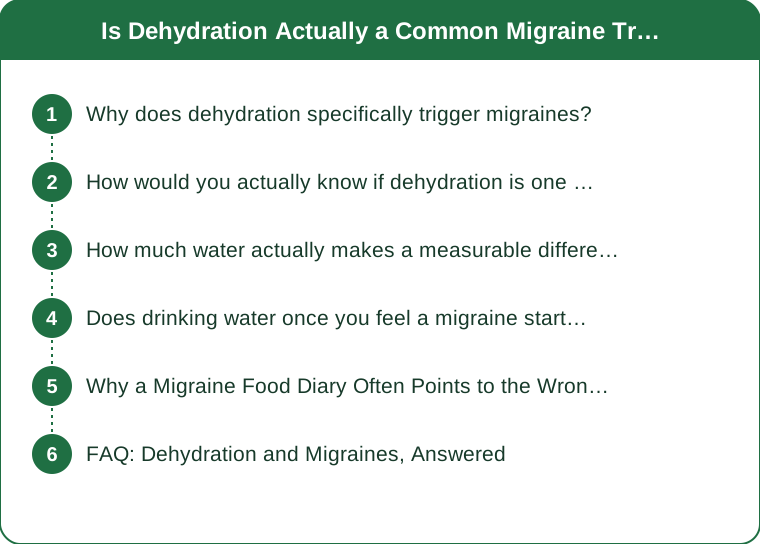
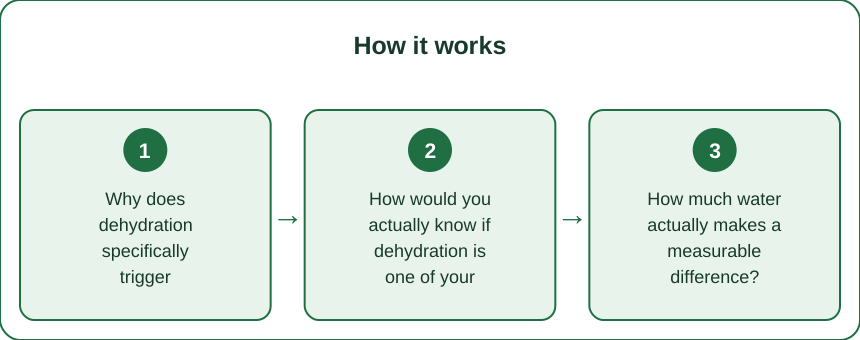
Why does dehydration specifically trigger migraines?
Even mild dehydration causes the brain to temporarily contract slightly, pulling away from the skull in a way that’s thought to activate pain-sensitive structures. Dehydration also affects electrolyte balance and blood volume, both of which play roles in the vascular changes associated with migraine attacks.
How would you actually know if dehydration is one of your specific triggers?
Track it for a few weeks: note your rough water intake alongside migraine occurrence, paying particular attention to days with less activity where you might drink less without noticing, hot weather, or after alcohol, which is dehydrating on top of its own trigger potential. A pattern of migraines on notably low-water-intake days is a strong signal.
How much water actually makes a measurable difference?
Research on migraine and hydration generally used increases of 1-1.5 liters above a person’s typical baseline intake, not an extreme total volume — this usually lands most adults around 2.5-3 liters daily including water from food. The goal is consistent adequate hydration, not a single large glass when you feel a migraine starting.

Does drinking water once you feel a migraine starting actually help?
It can help modestly if dehydration contributed to that specific attack, but water isn’t a fast-acting treatment the way medication is — it works better as prevention through consistent daily intake than as an in-the-moment fix once pain has already started.
Why a Migraine Food Diary Often Points to the Wrong Trigger
People tracking food triggers frequently miss dehydration because it’s not a food, so it doesn’t make it onto a food diary — but a day with less water intake often coincides with skipped meals or altered routine, and the food gets blamed instead of the underlying hydration pattern. Tracking water alongside food closes this blind spot.
FAQ: Dehydration and Migraines, Answered
Does electrolyte content matter, or is plain water enough?
For most people plain water is sufficient, but if you sweat heavily or migraines cluster around exercise, adding electrolytes may address a sodium or potassium component dehydration alone doesn’t cover.
Can drinking too much water also be a problem?
Yes, though rare — significantly overdoing water intake can dilute sodium levels and cause its own issues, so aim for consistent adequate intake rather than extreme overcorrection.
Is caffeine dehydrating in a way that specifically raises migraine risk?
Caffeine has a mild diuretic effect but moderate intake doesn’t cause significant dehydration for regular consumers; the bigger risk is caffeine withdrawal itself, which is a well-documented trigger.
TL;DR:
- Dehydration is a common, often-overlooked migraine trigger
- Mild brain volume changes and electrolyte shifts are the likely mechanism
- Track water intake alongside migraines for a few weeks to check your pattern
- Consistent daily hydration works better as prevention than as an in-the-moment fix
If your migraine triggers feel inconsistent or hard to pin down, checking your typical water intake on migraine days is one of the simplest patterns to rule in or out.
Keep Reading
This article is for general informational purposes only and is not medical advice. Always consult a qualified health professional for guidance specific to you.