Does Exercise Trigger Migraines, or Actually Help Prevent Them?
Quick Answer: Regular, moderate exercise is associated with fewer migraine days in multiple studies, while sudden intense or unaccustomed exertion can trigger an attack in susceptible people. The relationship depends heavily on consistency and intensity ramp, not exercise itself being good or bad.
Some people swear exercise triggers their migraines. Others use running as their main prevention tool. Both experiences are supported by different parts of the same research picture — the details of how and how often matter enormously here.

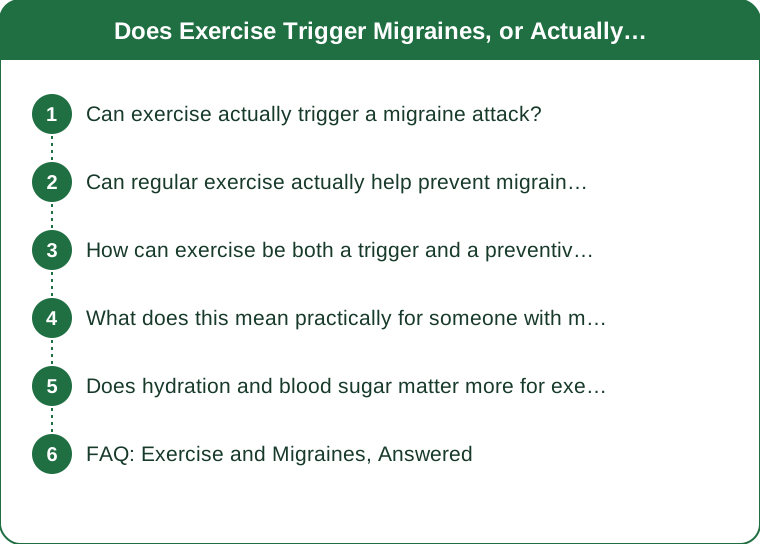
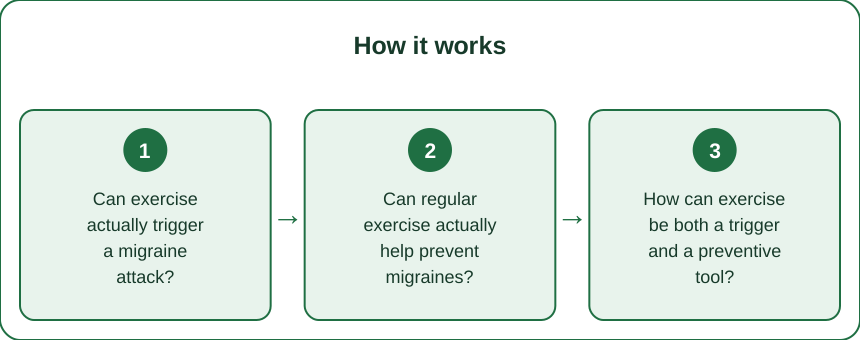
Can exercise actually trigger a migraine attack?
Yes, in a specific pattern — sudden, intense, or unaccustomed exertion is a recognized trigger category for a subset of migraine sufferers, sometimes called exertional or exercise-triggered migraine. This is most associated with abrupt high-intensity effort rather than a gradual, regular training pattern, which points to it being more about exertion spikes than exercise generally.
Can regular exercise actually help prevent migraines?
Multiple studies point this direction. Regular moderate aerobic exercise has been associated with reduced migraine frequency in several trials, with proposed mechanisms including improved stress regulation, better sleep quality, and possible effects on inflammatory pathways relevant to migraine. The prevention effect is generally seen with consistent, moderate-intensity exercise over weeks to months, not a single session.
How can exercise be both a trigger and a preventive tool?
Because the two findings describe different exposure patterns: a sudden, unaccustomed intense effort (the trigger pattern) versus a gradually built, consistent moderate routine (the prevention pattern). This is similar to how sudden extreme heat or dehydration can trigger a migraine while overall good hydration habits support prevention — it’s about spikes and unpreparedness, not the activity category itself.

What does this mean practically for someone with migraines who wants to exercise?
Building intensity gradually, staying well-hydrated, avoiding sudden extreme exertion (especially in heat), and keeping a consistent routine rather than sporadic hard efforts appears to capture the preventive benefit while minimizing trigger risk, based on the pattern across the available research. Starting new or harder exercise slowly, rather than jumping straight into high-intensity training, is the most consistently mentioned practical takeaway.
Does hydration and blood sugar matter more for exercise-related migraines specifically?
For many people, yes — dehydration and blood sugar drops are separately recognized migraine triggers, and exercise can compound both if not managed (sweating without adequate replacement, training fasted for a long duration). Managing these two factors around a workout is a commonly recommended step specifically for people who notice exercise-associated migraines.
FAQ: Exercise and Migraines, Answered
What type of exercise is least likely to trigger a migraine?
Moderate, steady-state activities like walking, swimming, or cycling built up gradually tend to have a lower reported trigger association than sudden high-intensity efforts, though individual triggers vary.
Should you stop exercising entirely if you notice it triggers migraines?
Not necessarily — working with a doctor to identify whether it’s intensity, heat, dehydration, or timing that’s the actual trigger often allows exercise to continue in a modified form rather than being eliminated entirely.
Does exercise help during an active migraine attack, or only for prevention?
Generally exercise is not recommended during an active attack, since movement and light sensitivity often worsen symptoms in the moment — the preventive benefit applies to a regular routine between attacks, not as an in-the-moment treatment.
TL;DR:
- Sudden intense or unaccustomed exercise can trigger migraines in susceptible people
- Regular, moderate, consistent exercise is associated with fewer migraine days over time
- The difference is exertion pattern (spike vs. gradual), not exercise being inherently good or bad
- Managing hydration, blood sugar, and heat around workouts reduces trigger risk
This is general information, not medical advice — work with a doctor or headache specialist to identify your specific triggers before building an exercise routine around migraine prevention.
Keep Reading
This article is for general informational purposes only and is not medical advice. Always consult a qualified health professional for guidance specific to you.