Exercise and Migraines: Is Working Out a Trigger or Actually Helpful?
Quick Answer: Exercise can be both a migraine trigger and a preventive tool depending on intensity, hydration, and individual sensitivity — sudden, high-intensity exertion (especially without proper warm-up or hydration) is a documented trigger for some people, while regular, moderate aerobic exercise is associated with reduced migraine frequency over time in research.
The same activity that occasionally triggers a migraine for you can, done differently, actually become part of preventing the next one.

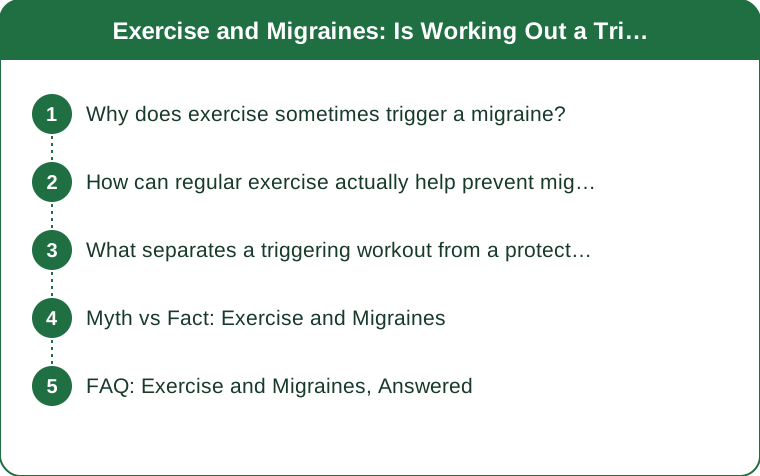
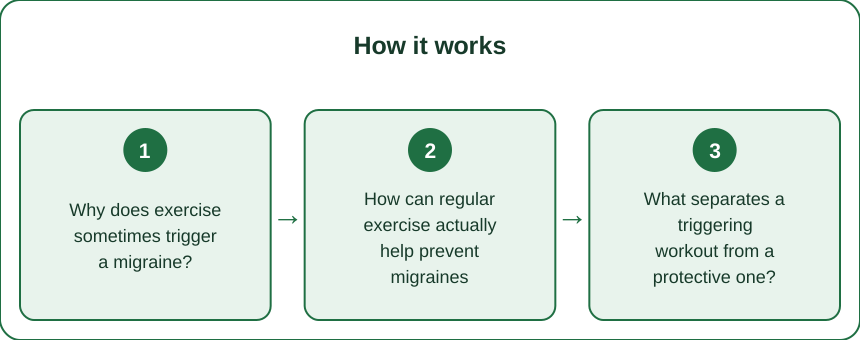
Why does exercise sometimes trigger a migraine?
Exertion headaches and exercise-triggered migraines are a recognized phenomenon, often linked to sudden blood pressure and vascular changes during intense or unaccustomed exertion. Dehydration, low blood sugar, and skipping a warm-up are common compounding factors that raise this risk further.
How can regular exercise actually help prevent migraines long-term?
Research on regular moderate aerobic exercise (3-4 times weekly) shows an association with reduced migraine frequency over months, likely related to improved stress regulation, better sleep quality, and cardiovascular adaptations — the preventive effect builds gradually, not from a single session.

What separates a triggering workout from a protective one?
Gradual warm-ups, consistent hydration, and avoiding sudden extreme intensity spikes are the main differentiators. A gradual, moderate-intensity session with proper preparation carries meaningfully lower trigger risk than an unplanned, maximal-effort session, especially in heat or when under-hydrated.
Myth vs Fact: Exercise and Migraines
Myth: People with migraines should avoid exercise altogether. Fact: Regular, appropriately paced exercise is generally recommended as part of migraine management, not something to avoid entirely.
Myth: Any workout that triggers a migraine once will always trigger one. Fact: Trigger risk often depends heavily on that day’s hydration, sleep, and warm-up — the same workout done differently often doesn’t trigger a repeat episode.
Myth: Only high-intensity exercise carries migraine trigger risk. Fact: Even moderate exercise can trigger a migraine if hydration or warm-up preparation is skipped — intensity is one factor among several.
FAQ: Exercise and Migraines, Answered
What type of exercise is generally safest to start with for migraine sufferers?
Low-to-moderate steady-state cardio (walking, swimming, cycling) with a proper warm-up is commonly recommended as a starting point.
Should I stop exercising completely if a workout ever triggers a migraine?
Not necessarily — review hydration, warm-up, and intensity from that session first, since a single trigger event doesn’t mean exercise itself is the problem.
Is it worth tracking exercise alongside other migraine triggers?
Yes — a migraine diary tracking exercise type, intensity, hydration, and sleep alongside episodes often reveals a clearer personal pattern than general guidelines can.
TL;DR:
- Sudden, high-intensity exertion without proper preparation is a documented migraine trigger
- Regular, moderate aerobic exercise is associated with reduced migraine frequency over time
- Hydration, gradual warm-ups, and avoiding intensity spikes lower trigger risk
- Tracking exercise details alongside migraine episodes reveals your own specific pattern
This is general information, not medical advice — anyone with frequent or severe migraines should work with a doctor to build an exercise plan suited to their specific triggers.
Keep Reading
This article is for general informational purposes only and is not medical advice. Always consult a qualified health professional for guidance specific to you.