Exercise and Migraine: Training as Prevention Without Triggering an Attack
Exercise sits on both sides of the migraine ledger — a proven preventive that rivals some medications in trials, and an occasional trigger when done wrong — and the difference is knowable rules. The migraine-training guide: the evidence, the trigger-aware craft and the attack-week protocol.

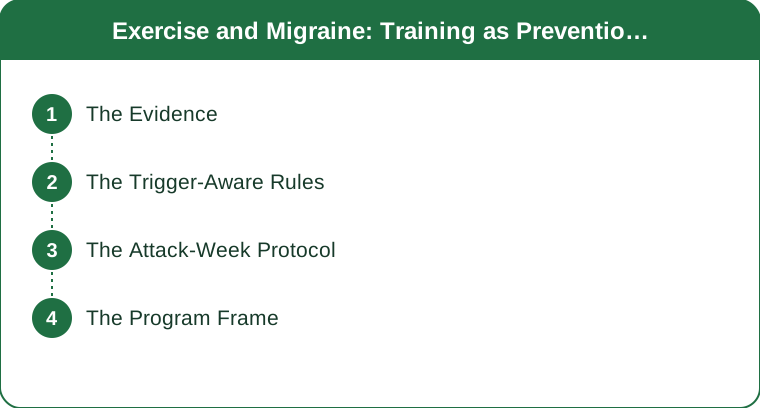
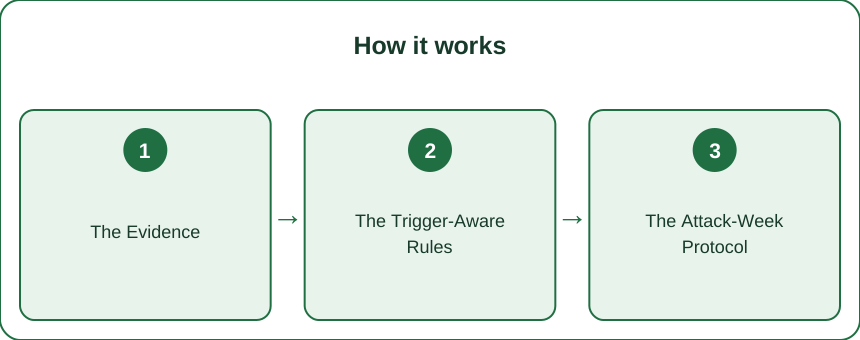
The Evidence
What movement does for migraine: the prevention trials (the regular aerobic exercise reducing attack frequency in studies — the effect sizes comparable to some preventive medications; the 40-minute-thrice-weekly protocols in the research), the mechanism candidates (the stress-system regulation, the sleep improvement and the inflammation shifts — the migraine threshold raised by the same pillars the calm chapters build), the consistency key (the benefits tracking REGULAR practice — the sporadic hard sessions carrying trigger risk without the preventive base; the pattern being the medicine), and the honest boundary (exercise as one tool in the toolkit from the migraine-starter chapter — the medical management, sleep and trigger-tracking partnership; the neurologist conversation for the frequent-attack tier).
The Trigger-Aware Rules
Training without provoking: the warm-up law (the exertion-triggered attacks concentrating at abrupt starts — the ten-minute gradual ramp as the single best insurance; the cold-start sprint being the classic mistake), the intensity ladder (the moderate base built for weeks before high intensity — the zone-2 doctrine as the migraine-safe on-ramp; the intervals added gradually to a body that trusts exercise), the hydration-and-fuel bracket (the dehydration and skipped-meal triggers stacked with exertion being the perfect storm — the pre-session water and snack from the trigger chapters; the fasted-hard-training experiment skipped by this population), the environment management (the heat, glare and loud-music triggers in gym form — the temperate hours, the sunglasses on outdoor runs, the own-playlist control; the hot-class caution from the heat chapters), the neck-and-posture note (the cervical tension feeding some patterns — the form check and the desk-posture work from the neck chapters), and the personal-pattern journal (the training log crossed with the attack diary — the YOUR-triggers detective work from the toolkit doctrine; the rules customized by data).

The Attack-Week Protocol
Movement around episodes: the prodrome honesty (the warning-phase day trained gently or not at all — the yawning-fog-and-craving signals answered with downshift; the attack sometimes averted, never bullied), the attack-day rule (the full rest without guilt — the movement forced mid-attack helping nobody; the dark-quiet-room medicine respected), the postdrome return (the hangover-phase days re-entered through walks — the gentle-first doctrine; the normal training resumed when the head agrees), the frequency-flare seasons (the bad months trained at maintenance — the traffic-light system from the condition chapters; the consistency held small rather than abandoned), and the swap library (the trigger-y formats exchanged — the HIIT for the incline walk, the hot class for the swim, the heavy-strain lifting for the moderate sets; the stimulus kept, the provocation dropped per the swap-not-stop rule).
The Program Frame
The migraine-friendly week: the template (the three moderate cardio sessions — the brisk walks, swims or cycles at conversational pace; the two gentle strength sessions from the low-impact doctrine; the daily outdoor-light walk for the sleep-circadian wing), the sleep-anchor synergy (the regular schedule serving both the training and the migraine threshold — the consistency doctrine doubled), the stress-tool integration (the breathwork and yoga tiers from the calm chapters — the nervous-system work that the prevention evidence rides on), the medication coordination (the preventive-and-acute plans discussed with the prescriber alongside the training — the exercise as adjunct, timed around what works), and the empowerment close (the migraine brain responding to trained regularity — the attacks fewer in the trials and the life bigger between them; the movement reclaimed from the trigger list and moved to the treatment list, where the evidence says it belongs). Warm up long, build gradually, hydrate and fuel, rest the attack: the threshold, raised.
Regular moderate exercise reduces attack frequency at medication-comparable rates in trials — the trigger risk lives in cold starts, dehydration and sudden intensity. Warm up ten minutes, build gradually, and rest attacks without guilt.
Keep Reading
This article is for general informational purposes only and is not medical advice. Always consult a qualified health professional for guidance specific to you.