The Hormonal Migraine Pattern Most Women Never Get Told About
Migraines that seem to strike randomly often follow a pattern tied directly to hormonal fluctuation, one that’s rarely explained clearly even to women who experience it every single cycle. Recognizing the pattern doesn’t cure the migraine, but it removes a lot of the guesswork around triggers.

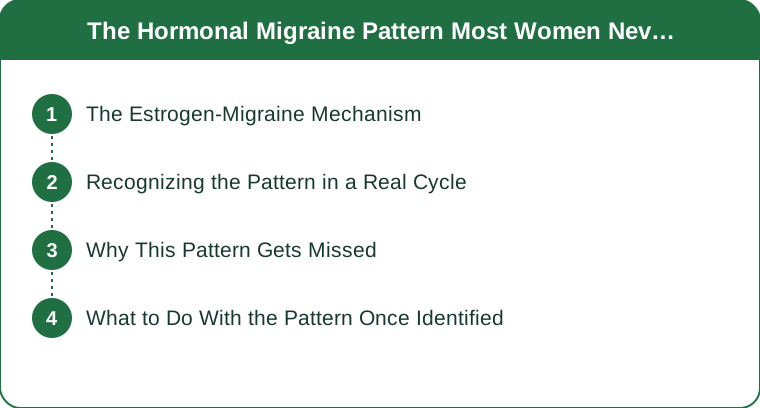
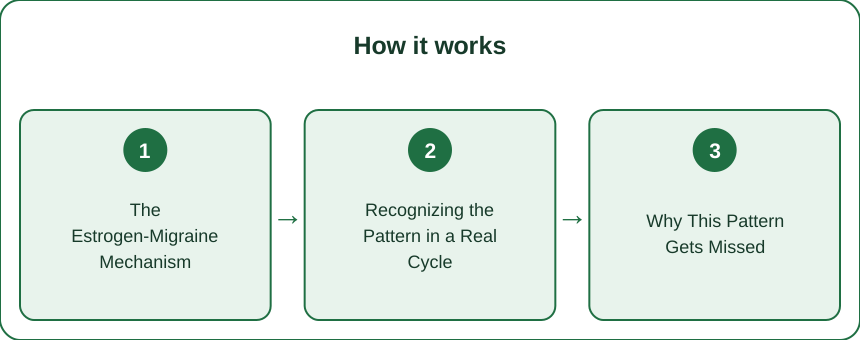
The Estrogen-Migraine Mechanism
The biology: the the-estrogen-withdrawal-trigger (a sharp drop in estrogen levels, rather than low estrogen itself, being the specific hormonal event most strongly associated with triggering a migraine), the the-prostaglandin-involvement (the estrogen drop triggering a release of prostaglandins, inflammatory compounds also involved in typical menstrual cramping, which appear to play a role in migraine onset as well), the the-serotonin-connection (estrogen fluctuation affecting serotonin regulation in the brain, a neurotransmitter closely tied to migraine mechanisms independent of the hormonal cycle itself)).
Recognizing the Pattern in a Real Cycle
The timing: the the-pre-menstrual-window (migraines most commonly clustering in the two to three days immediately before menstruation begins, coinciding with the sharpest estrogen decline in the cycle), the the-ovulation-secondary-window (a smaller subset of people also experiencing a secondary migraine risk window around ovulation, tied to a separate, smaller hormonal fluctuation), the the-consistency-across-cycles-signal (a hormonal migraine pattern typically showing up with reasonable consistency cycle after cycle, which is what separates it from migraines with less predictable, non-hormonal triggers).

Why This Pattern Gets Missed
The reasons: the the-food-trigger-misattribution (migraines occurring during a hormonally vulnerable window sometimes getting incorrectly blamed on whatever food happened to be eaten that day, when the hormonal timing was the actual driver), the the-no-tracking-no-pattern-visibility (a hormonal pattern being essentially invisible without deliberate tracking across at least two to three cycles, since any single migraine occurrence looks random in isolation), the the-under-discussion-in-general-care (hormonal migraine patterns getting relatively little attention in general medical conversations compared to how common the pattern actually is).
What to Do With the Pattern Once Identified
The practical use: the the-cycle-tracking-app-value (using a simple cycle and symptom tracking app for a few months to establish whether a personal hormonal pattern actually exists before assuming it does), the the-preventive-timing-conversation (a confirmed hormonal pattern being useful information to bring to a doctor, since some preventive approaches are specifically timed around the predictable pre-menstrual window), the the-reduced-self-blame-value (recognizing a hormonal trigger reducing the tendency to blame unrelated factors like diet or stress for something with a clearer underlying cause), and the frame (hormonal migraines follow a real, trackable pattern tied to the sharp estrogen drop before menstruation — a few cycles of tracking often reveals a pattern that felt completely random before, and that pattern is worth bringing to a doctor.)
A migraine pattern that seems to strike without warning often actually tracks closely with a specific hormonal event, a sharp drop in estrogen rather than low estrogen itself, most commonly occurring in the two to three days immediately before menstruation begins. That estrogen drop appears to trigger a release of prostaglandins, the same inflammatory compounds involved in typical menstrual cramping, alongside shifts in serotonin regulation that are independently tied to migraine mechanisms. The pattern is easy to miss without deliberate tracking, since any single migraine looks random in isolation and often gets incorrectly blamed on whatever food happened to be eaten that day rather than the hormonal timing actually driving it. This is general information, not medical advice, and a few months of simple cycle and symptom tracking is usually enough to reveal whether a personal hormonal pattern exists, information that’s genuinely useful to bring to a doctor since some preventive approaches are specifically timed around that predictable pre-menstrual window.
Keep Reading
This article is for general informational purposes only and is not medical advice. Always consult a qualified health professional for guidance specific to you.