Weather-Triggered Migraines: You Can't Control the Sky, but You Can Out-Plan It
Quick Answer: Falling barometric pressure ahead of storms is one of the most commonly reported migraine triggers. You can’t stop weather — but you can confirm the link with a 6-week diary, get 12-24 hours of warning from pressure-forecast apps, and use high-risk days for trigger-stacking defense: guard sleep, hydrate, don’t skip meals, and have your treatment plan within reach at first sign.
It’s not your imagination: the headache that arrives the day before the storm, when the sky is still blue, has a mechanism. And while the atmosphere doesn’t negotiate, it does something almost as good — it announces itself in advance.

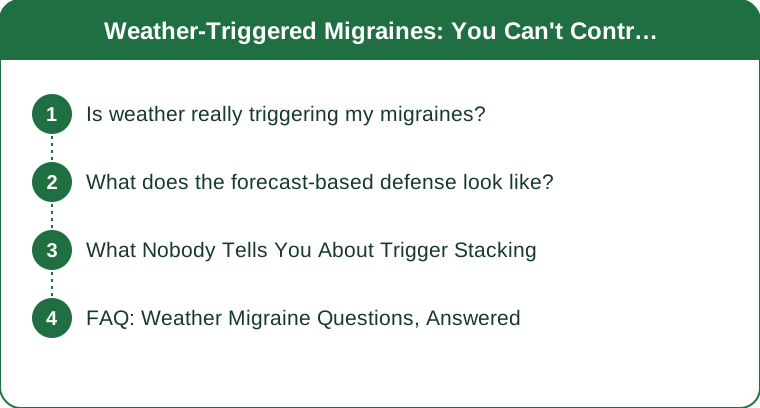
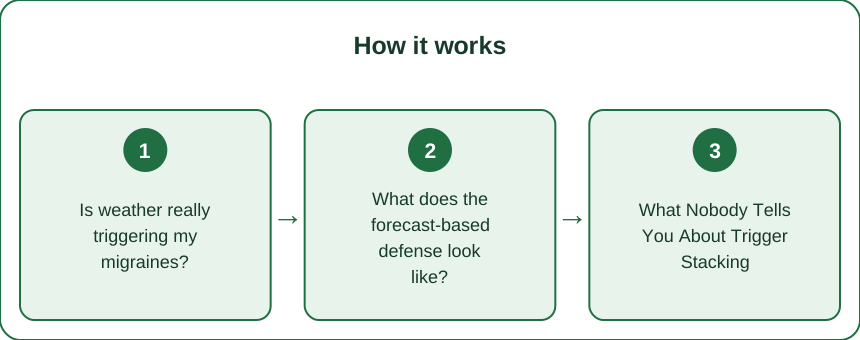
Is weather really triggering my migraines?
Barometric pressure changes — especially drops ahead of storm systems — are among the most frequently reported triggers in migraine surveys, with temperature swings and humidity close behind. The proposed mechanism involves pressure differentials affecting sinus and inner-ear structures and nudging an already-sensitive nervous system past threshold.
But ‘commonly reported’ isn’t ‘yours.’ Confirm before you plan: run a 6-week diary logging attacks alongside that day’s pressure trend (weather apps show it). The tell: attacks clustering in the 12-24 hours around falling pressure, often before visible weather arrives.
Worth knowing while you log: weather rarely acts alone — it usually tips you over when other triggers (short sleep, skipped meals, stress) already loaded the scale. That detail becomes your main weapon in a moment.
What does the forecast-based defense look like?
Once confirmed, the plan runs on warning time:
- Get the forecast: several weather apps report pressure trends and some are built specifically for migraine forecasting. A drop of a few millibars over 24 hours flagged = your yellow-alert day.
- Defend the stack: you can’t move the sky, but you can unload every other trigger on alert days — protect a full night’s sleep, eat on schedule (no skipped meals), hydrate deliberately, downshift optional stressors, and go easy on alcohol. Weather tips a loaded scale; your job is emptying the scale.
- Treatment readiness: attacks respond best to early treatment, so on alert days keep your rescue plan physically nearby and act at first sign rather than ‘waiting to see.’ Discuss the specifics — including whether pre-emptive strategies fit your situation — with your clinician.
- Log outcomes: alert days that pass clean teach you your real threshold; the diary keeps earning after the confirmation phase.

What Nobody Tells You About Trigger Stacking
The most useful reframe in migraine management: triggers usually work as a cumulative load, not single causes. A pressure drop on a well-slept, well-fed, low-stress week might pass unnoticed; the same drop after two short nights and a skipped lunch is a near-guarantee.
This explains the maddening inconsistency — ‘storms trigger me except when they don’t’ — that makes people abandon tracking. The storm was never the whole story; it was the last item on a full tray.
It’s also why weather, the one trigger you can’t remove, is more manageable than it looks: you don’t defend against the storm — you defend the rest of the tray. Every controllable trigger you clear on a pressure-drop day is capacity handed back to your threshold. This is general information, not medical advice.
FAQ: Weather Migraine Questions, Answered
Which pressure change matters — high, low, or the swing?
Reports most often implicate falling pressure and rapid swings in either direction, but individual patterns vary — some people react to heat, humidity, or bright post-storm glare instead. Your diary outranks the averages.
Do pressure-filtering earplugs work?
Some users report benefit from earplugs designed to slow pressure equalization; formal evidence is thin. Reasonable to trial cheaply during confirmed pressure events — log results like everything else.
When is this beyond self-management?
If attacks are frequent (several monthly), disabling, or escalating, forecast-planning belongs alongside a clinician conversation about preventive options — modern preventives have changed many weather-sensitive lives. And any sudden, severe, ‘worst-ever’ headache is emergency care, not weather planning. This is general information, not medical advice.
TL;DR:
- Falling pressure before storms is a top reported trigger — confirm yours with a 6-week diary against pressure trends
- Pressure forecasts give 12-24 hours of warning; use it to unload every other trigger (sleep, meals, hydration, stress)
- Triggers stack — you defend the tray, not the storm
- Frequent or escalating attacks: bring the diary to a clinician; preventives may change the game
The sky publishes its plans a day early — that’s not a curse, that’s a briefing. This is general information, not medical advice.
Keep Reading
This article is for general informational purposes only and is not medical advice. Always consult a qualified health professional for guidance specific to you.