Why Dehydration Triggers Migraines Faster Than You Think
Quick Answer: Even mild dehydration — a fluid loss of around 1-2% of body weight, which can happen from a single missed water intake day — has been linked to migraine onset in susceptible people, likely through changes in blood volume and brain fluid balance.
You tracked food triggers, sleep, and stress for months, and dehydration barely made the list — yet it’s one of the most consistently reported triggers in migraine research, often overlooked because the threshold is lower than expected.
This is general information, not medical advice.

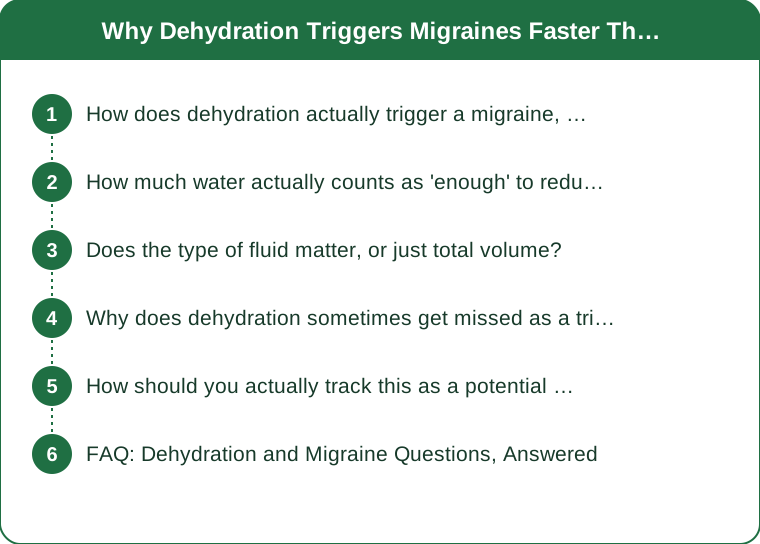
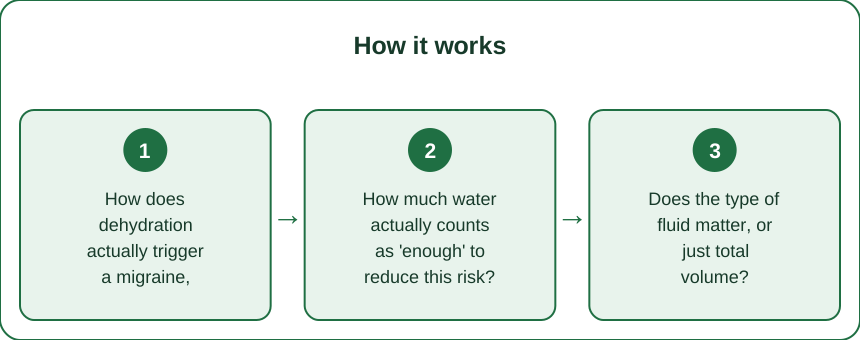
How does dehydration actually trigger a migraine, mechanically?
Reduced fluid volume affects blood volume and can alter pressure and chemical balance around the brain, both implicated in migraine onset for sensitive individuals. Even a mild deficit — well before the ‘obviously thirsty’ stage — appears sufficient to act as a trigger in susceptible people.
How much water actually counts as ‘enough’ to reduce this risk?
General guidance suggests around 9-13 cups (roughly 2.2-3 liters) of total fluid daily for most adults, though individual needs vary with activity, climate, and body size. For migraine-prone individuals specifically, some clinicians suggest tracking whether migraine frequency drops noticeably when hydration is deliberately increased and sustained over several weeks.
Does the type of fluid matter, or just total volume?
Plain water is the most reliable baseline, but electrolyte balance matters too — losing sodium and other electrolytes through sweat (heavy exercise, hot weather) without replacing them can compound dehydration’s migraine-triggering effect even if total water volume seems adequate.

Why does dehydration sometimes get missed as a trigger?
Because the migraine often doesn’t hit until hours after the dehydrating event — a hot afternoon, a long flight, an intense workout without enough water — making the connection less obvious than an immediate trigger like bright light. Migraine diaries that only log same-day factors can miss this lag.
How should you actually track this as a potential trigger?
Note fluid intake and any notably dehydrating days (illness, alcohol, heat, intense exercise) alongside migraine occurrence for several weeks, watching specifically for migraines appearing 12-24 hours after a low-hydration day rather than only same-day patterns.
FAQ: Dehydration and Migraine Questions, Answered
Can drinking water stop a migraine once it’s already started?
Hydration alone rarely resolves an active migraine once triggered, but staying hydrated during one may prevent it from worsening — this is general information, not a treatment recommendation.
Is alcohol a migraine trigger because of dehydration, or something else?
Both — alcohol dehydrates and contains compounds (like tyramine in some drinks) that separately trigger migraines in some people, making it a double-factor trigger for many.
Should migraine sufferers drink more water than general guidelines suggest?
There’s no universally agreed higher target, but some clinicians recommend migraine-prone patients err toward the higher end of general hydration guidelines and track their own response.
TL;DR:
- Even mild dehydration (1-2% of body weight) is linked to migraine onset in susceptible people
- General target is roughly 9-13 cups of fluid daily, adjusted for activity and climate
- Electrolyte balance matters alongside plain water volume
- Migraines from dehydration often lag 12-24 hours, so track fluid intake, not just same-day symptoms
This is general information, not medical advice — a doctor can help identify your specific migraine triggers and appropriate hydration targets.
Keep Reading
This article is for general informational purposes only and is not medical advice. Always consult a qualified health professional for guidance specific to you.