Why a Migraine Food Diary Often Blames the Wrong Meal Entirely
A migraine food diary often points a finger at whatever was eaten right before the headache started, but migraine triggers can have a delay of many hours, sometimes up to a full day, which means the actual culprit is frequently a meal from well before the one that gets blamed.

Why the Delay Causes Misattribution
The lag: the neurological-cascade-that-produces-a-migraine-can-take-several-hours-to-up-to-a-full-day-to-fully-develop-after-the-actual-trigger (the neurological cascade that produces a migraine attack often taking anywhere from several hours to up to a full day to fully develop after the actual triggering exposure, meaning the meal eaten right before the headache started is frequently not the one responsible at all, per the migraine-food-trigger-myth-versus-real-guide logic — the neurological-cascade-often-taking-several-hours-to-up-to-a-full-day-to-fully-develop-after-the-actual-trigger-meaning-the-meal-right-before-the-headache-is-frequently-not-responsible), and the reframe (the diary correctly recording what was eaten but incorrectly assuming the shortest possible time lag)).

Why This Specifically Misleads Food Diary Conclusions
The tracking flaw: the typical-diary-format-only-asks-about-the-last-meal-or-two-which-misses-the-full-window-where-the-actual-trigger-could-have-occurred (the typical food diary format only prompting for the last meal or two before an attack, a window that misses the fuller 12-to-24-hour range where the actual trigger could realistically have occurred, per the migraine-food-triggers logic — the typical-food-diary-format-only-prompting-for-the-last-meal-or-two-a-window-that-misses-the-fuller-12-to-24-hour-range-where-the-actual-trigger-could-have-occurred), and the frame (a diary that only looks back one meal structurally unable to catch a delayed trigger, no matter how carefully it’s kept)).
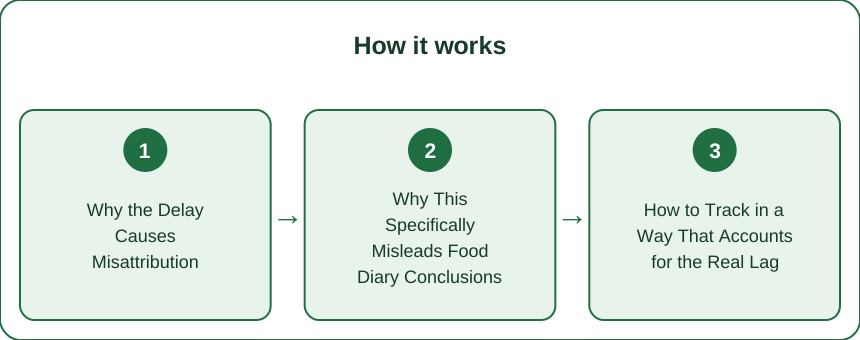
How to Track in a Way That Accounts for the Real Lag
The better method: the log-every-meal-and-drink-for-a-full-24-hours-before-each-attack-rather-than-just-the-most-recent-one (logging every meal and drink for a full 24 hours before each attack, rather than just the meal or two immediately preceding it, and looking specifically for patterns that repeat across multiple attacks at that longer distance, per the migraine-toolkit-starter logic — the logging-every-meal-and-drink-for-a-full-24-hours-before-each-attack-rather-than-just-the-most-recent-meal-and-looking-for-patterns-that-repeat-at-that-longer-distance), and the frame (extending the tracking window to match the actual biological delay, rather than the shortest and most intuitive one, being what makes a food diary genuinely useful here).
The neurological cascade that produces a migraine attack often takes anywhere from several hours to up to a full day to fully develop after the actual triggering exposure, which means the meal eaten right before a headache started is frequently not the one actually responsible, and a typical food diary that only prompts for the last meal or two structurally misses that fuller window. Logging every meal and drink for a full 24 hours before each attack, rather than just the most recent one, and looking for patterns that repeat across multiple attacks at that longer distance, is what actually accounts for the real delay. This is general information, not medical advice.
Keep Reading
This article is for general informational purposes only and is not medical advice. Always consult a qualified health professional for guidance specific to you.