Why Dehydration Triggers Migraines Faster Than You Think
Quick Answer: For migraine-prone people, even 1-2% body water loss — a level many people reach without noticing — can be enough to trigger an episode. Consistent hydration throughout the day, not just when thirsty, is the more reliable prevention strategy.
You didn’t feel particularly thirsty. You just had a slightly lighter water day than usual. And yet the migraine showed up anyway — because for migraine-sensitive brains, the dehydration threshold is lower than most people assume.

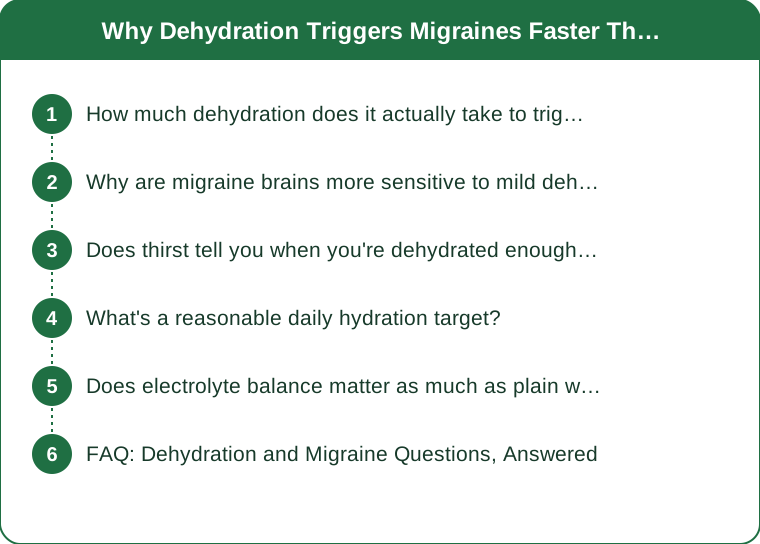
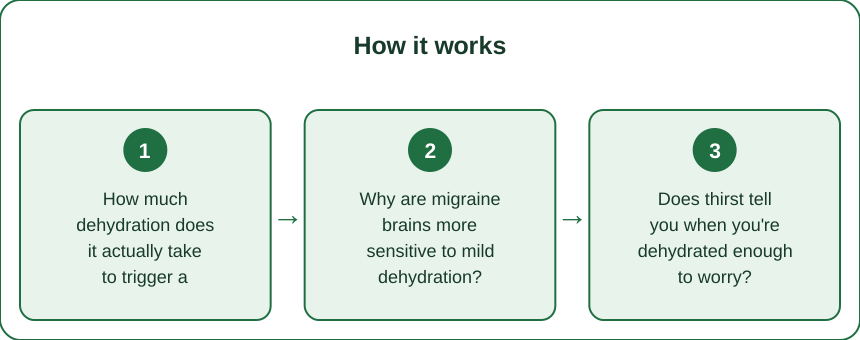
How much dehydration does it actually take to trigger a migraine?
Research on migraine and hydration suggests that fluid losses as small as 1-2% of body weight — a level that often produces no obvious thirst signal — can be enough to trigger an episode in susceptible people. That’s roughly 1.5-3 pounds of water weight for an average adult, easily lost through a warm day, exercise, or simply under-drinking.
Why are migraine brains more sensitive to mild dehydration?
Dehydration reduces blood volume slightly, which can affect blood flow regulation to the brain — one of several mechanisms implicated in migraine onset. Migraine-prone brains appear to have a lower threshold for these vascular and neurological triggers generally, which is why a dehydration level that a non-migraine person shrugs off can be enough to tip a sensitive person into an episode.
Does thirst tell you when you’re dehydrated enough to worry?
Not reliably — thirst typically doesn’t kick in until you’re already at a meaningful fluid deficit, often past the 1-2% threshold relevant to migraine triggering. Drinking on a schedule rather than waiting for thirst is a more protective strategy for migraine-prone people specifically.

What’s a reasonable daily hydration target?
General guidance suggests roughly half your body weight in ounces as a starting point (a 150lb person: around 75oz), adjusted upward for exercise, heat, or caffeine/alcohol intake, both of which increase fluid loss. Migraine-prone people may benefit from tracking this more deliberately than the general population, given the lower trigger threshold.
Does electrolyte balance matter as much as plain water?
Yes, somewhat — pure water without any electrolytes can, in some cases, be processed and excreted quickly without adequately rehydrating tissues. A small amount of sodium or a balanced electrolyte drink, especially after exercise or in heat, may support hydration more effectively than water alone.
FAQ: Dehydration and Migraine Questions, Answered
Can drinking water stop a migraine once it’s started?
It may help mildly in some cases, especially if dehydration was a contributing trigger, but it’s unlikely to fully resolve a migraine already underway — hydration works better as prevention than as treatment.
Does caffeine count toward hydration or against it?
Moderate caffeine intake has a mild diuretic effect, but typical daily coffee consumption doesn’t meaningfully dehydrate most people — it’s more of a factor at high intake levels.
Should I track water intake if I get frequent migraines?
It’s a reasonable low-cost experiment — a simple hydration log alongside a migraine diary can reveal whether dehydration is a consistent personal trigger. This is general information, not medical advice — a doctor can help evaluate migraine triggers more thoroughly if episodes are frequent or severe.
TL;DR:
- As little as 1-2% body water loss can trigger a migraine in sensitive people, often before thirst kicks in
- Drink on a consistent schedule rather than waiting to feel thirsty
- Target roughly half your body weight in ounces daily, more with exercise or heat
- Electrolytes support hydration better than plain water alone in some cases
This is general information, not medical advice — track your hydration alongside migraine episodes to see if this is a meaningful personal trigger.
Keep Reading
This article is for general informational purposes only and is not medical advice. Always consult a qualified health professional for guidance specific to you.